Operations
The holiday rush plan for walk-in shops: Thanksgiving to New Year’s
Thanksgiving is Thursday, November 26, 2026, and the lobby fills up the days before it. Everyone wants a fresh cut, a manicure or a clean car for the same few days. This plan from NextUp Walk-in covers the dates, the hours to set now, the wait math, and how to keep a full lobby calm without adding chairs.
The 2026 holiday dates at a glance
Six dates shape the next eight weeks. Decide your hours for each one now, before customers start asking.
Thanksgiving is Thursday, November 26. Black Friday is November 27 and Small Business Saturday is Saturday, November 28 (U.S. Small Business Administration, checked Nov 6, 2026). Christmas Eve falls on a Thursday, Christmas Day on a Friday, and New Year’s Eve on a Thursday.
Christmas and New Year’s both land on Fridays, which gives many customers a long weekend. The days just before each date tend to be the ones people ask about first.
The 2026 holiday dates and the decision for each
| Dec 24 | Thursday | Christmas Eve | An early close, and a last-call time for the line |
|---|---|---|---|
| Dec 25 | Friday | Christmas Day | Closed hours on Google and the door |
| Dec 31 | Thursday | New Year’s Eve | Hours, and when the last guest joins |
| Nov 26 | Thursday | Thanksgiving | Open or closed, and the hours the day before |
| Nov 27 | Friday | Black Friday | Extra hours, and who covers the door |
| Nov 28 | Saturday | Small Business Saturday | A gift card display and a sign at the door |
Dates for 2026. Thanksgiving, Black Friday and Small Business Saturday follow the U.S. calendar (U.S. Small Business Administration, Nov 6, 2026).
Why the line is longest just before the day
Most people want the cut close to the event, not weeks ahead. One barbershop’s holiday grooming guide (published Oct 20, 2026) suggests booking a haircut about 2 to 5 days before Thanksgiving or Christmas, and 1 to 3 days before New Year’s Eve.
That is one shop’s advice, not a measured study. Your own numbers are better. Look at last November and December’s busiest days and hours, and plan the same days again.
The wider mood is busy too. The National Retail Federation forecasts that U.S. retail sales in November and December 2026 will grow 4.2% over 2025, to $1.013 trillion (NRF, Oct 15, 2026). That is retail spending, not salon or barbershop visits, so treat it as a sign that people are out and about, not a forecast for your chairs.
Four weeks out: hours, signs and the door
Write down your hours for every holiday date, even the ones that match your usual hours. Then put them in three places: the front door, your website and your Google Business Profile. Google lets you set special hours for holidays without changing your regular ones.
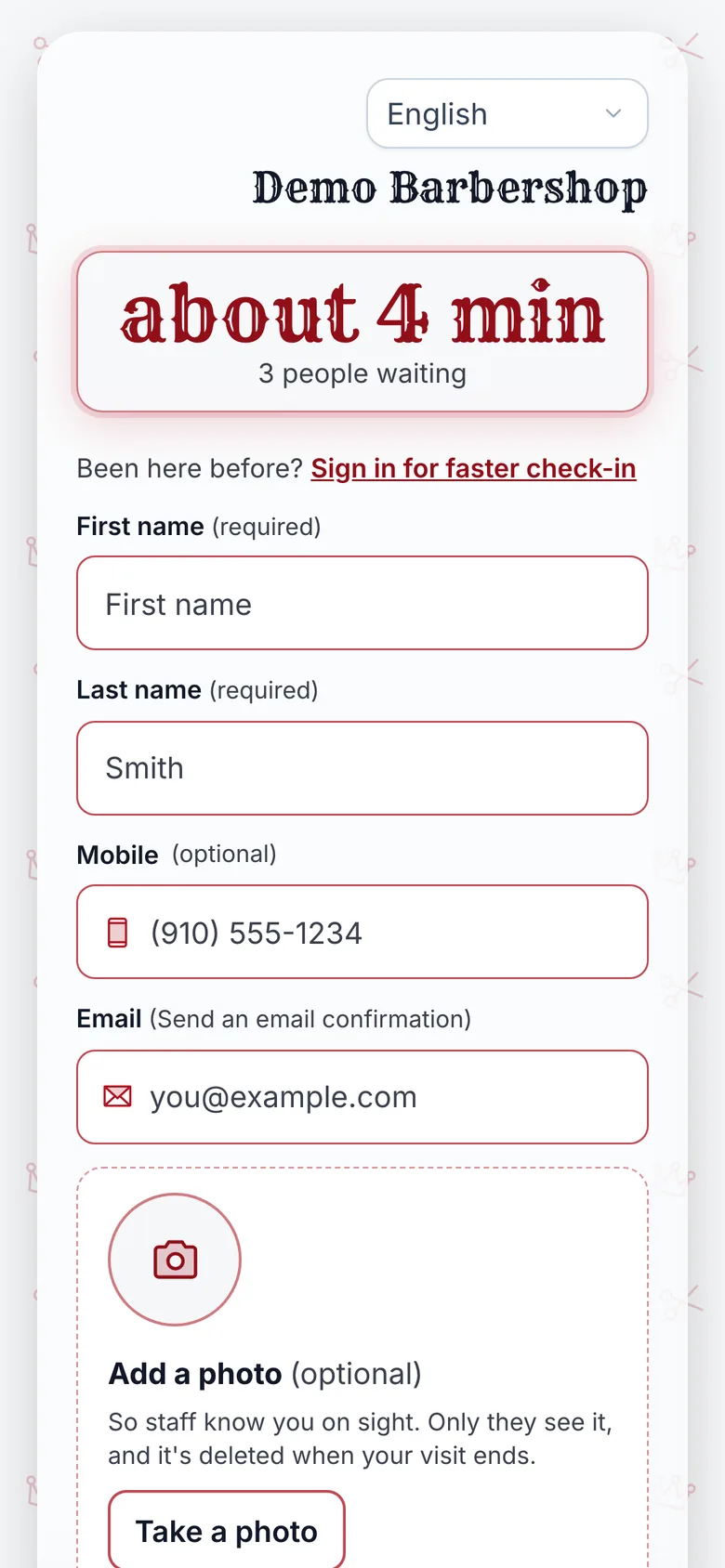
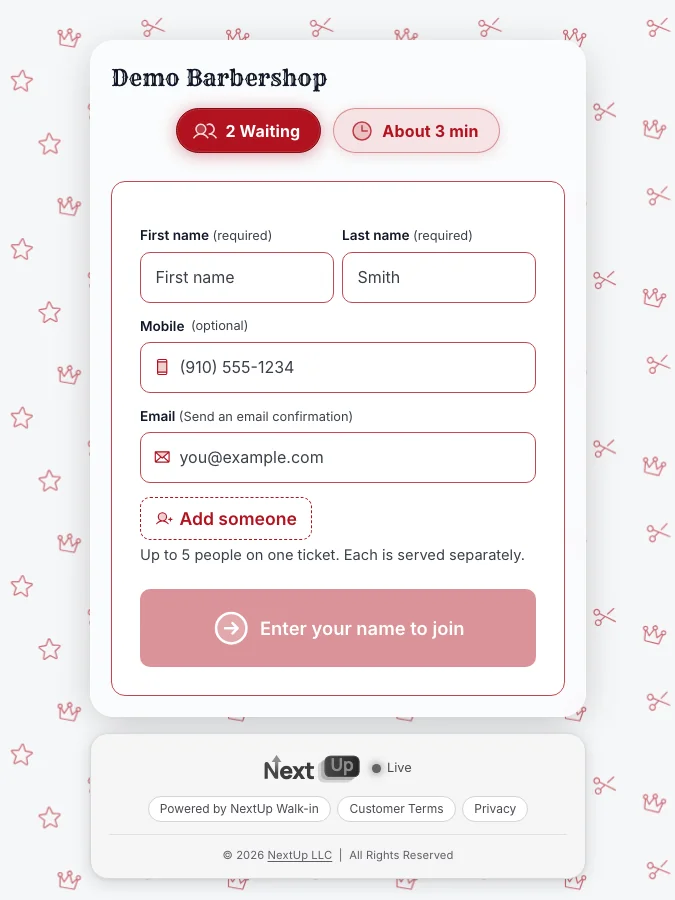
Add a sign at the door that says walk-ins are welcome and shows a QR code to get in line. A guest scans it from the sidewalk and can wait in the car, a coffee shop or at home.
Tell regulars the plan in the chair: “Thanksgiving week is busy. Scan the code and you can wait anywhere.”
- Set holiday hours for November 26, 27 and 28, December 24, 25 and 31, and January 1.
- Update Google, the door sign and your website on the same day.
- Print the QR sign and tape it where a guest can scan it from a few steps back.
- Brief the team on who calls the next guest and who greets the door.
The countdown to Thanksgiving week
| 21 | Hours and signs | Holiday hours on the door, Google and your website; the QR sign printed |
|---|---|---|
| 14 | Tell regulars | Say it in the chair: scan the code and wait anywhere |
| 7 | Test the path | Join the line from a phone, watch the wait, and call a test guest |
| 5 | Huddle | Who greets the door, who calls the next guest, who answers “how long?” |
| 2 | Busiest days | Run the routine, quote the live wait and check the numbers at close |
Do the wait math before the rush
A wait is people ahead, times minutes each, divided by chairs. Six people waiting, three chairs and 30 minutes a service means the next person waits about 60 minutes.
Try your own numbers below. Then ask the question that matters on a rush day: would a guest rather stand in your lobby for an hour, or come back in 45 minutes? Most would rather come back.
That is the point of a live line. The wait is quoted from the real queue and it moves as the day does, so you are not guessing out loud at the door.
Estimate the wait for the next person who walks in
Slide the numbers to match a busy hour. The estimate is the same arithmetic a line uses to quote a wait.
- Wait for the next person
- 60 min
- Waiting right now
- 6
- Chairs working
- 3
- 30 min each
Hover or tab to a column for the numbers.
| Wait | |
|---|---|
| #1 | 0 min |
| #2 | 0 min |
| #3 | 0 min |
| #4 | 30 min |
| #5 | 30 min |
| #6 | 30 min |
| #7 | 60 min |
Example arithmetic: the wait for place N is the full rounds of service ahead of you. Real services vary, which is why a live line re-quotes.
Assumes every service takes the same time. A live line quotes from the real services booked, so it moves as the day does.
A rush-day routine that keeps the lobby calm
Run the same short routine every busy day. It takes five minutes and saves an hour of arguments.
- Huddle before opening. Name who calls the next guest, who watches the door, and who answers “how long?”.
- Put the line on the wall. The lobby TV shows who is up and who is next, so people stop asking the counter.
- Offer the door tablet to anyone without a phone, or with a phone and no patience.
- Quote the live wait, never a hope. A short honest wait beats a promise you miss.
- Call people by name from the Staff Screen as each chair frees up.
- Look at the numbers at close: walk-ins who joined, walk-ins who left, and quoted against real waits.
Guests who leave without being served are the quiet cost of a rush. Our guide to reducing walk-in wait times covers how to keep them.
Sell ahead: gift cards and booked time
Gifts are part of the season. In the National Retail Federation’s 2026 holiday survey, 47% of holiday shoppers said they would like to receive gift cards, ahead of clothing at 44% (NRF winter holiday data, checked Nov 6, 2026).
A gift card collects money before the service is given and sends a new person to your door. A small display at the register in November is the simplest way to sell them. The rules, the math and the setup are in gift cards for walk-in shops.
If you take appointments for some services, open the busiest weeks early and hold a few chairs for walk-ins. Keep your booking app and add a walk-in line covers running both side by side.
Gift cards, appointments and the Busy dates card on the Home page are part of Pro. The line, the lobby TV and the door tablet are on every plan, Free included.
How NextUp Walk-in handles the rush
Free shows “Powered by NextUp Walk-in” on the check-in page. The Walk-in plan is $29 a month for your first location and includes 3 team members per location. Pro is $59. Every paid plan starts with a 14-day free trial, once per business. A card is needed to start, but nothing is charged until the trial ends, when the plan is charged unless you cancel first.
See NextUp Walk-in for barbershops, hair salons, nail salons, TV display, door tablet, pricing.
Be ready before Thanksgiving week
Questions
When should I set my holiday hours?
Now. Write the hours for every holiday date, even those that match your usual hours, and post them at the door, on your website and on your Google Business Profile the same day.
How do I handle a long wait in the lobby?
Let guests wait anywhere. With the NextUp app they scan a QR code, see their place and the live wait on their phone, and come back when they are close. The lobby TV shows who is up.
Can I run the holiday rush on the Free plan?
The line, the lobby TV and the door tablet are on every plan, Free included. Free covers 1 location, 1 team member and 50 check-ins a month, so a busy shop with several chairs usually needs a paid plan. Every paid plan starts with a 14-day free trial.
Do I need appointments for the holidays?
No. Many walk-in shops run the line alone. If you take bookings for some services, appointments are part of Pro and can sit beside the walk-in line.