Operations
How to cut walk-in wait times without hiring anyone
You cannot make a haircut, an oil change or a dog groom faster by wishing. You can change when people arrive, who they wait for, and what they know before they walk in. Here are five things that move the wait, all in NextUp Walk-in.
The short answer
Most of a long wait is a timing problem. The line is longest at the same hours every week, and customers who could have come an hour later do not know that. Show them the quiet times, show the real wait for the person they want, offer a sister location when one is empty, and let people leave the building while they wait.
None of that needs more staff. It needs the customer to see what you already know.
1. Tell people the best time to come today
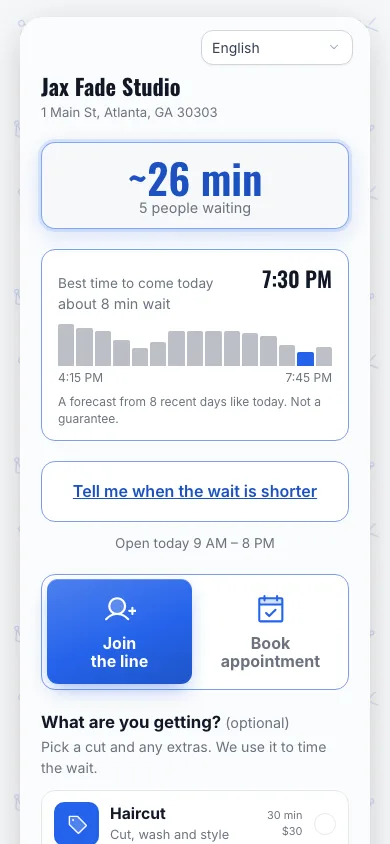
The join page now shows a “Best time to come today” forecast: the lowest expected wait for each quarter-hour of the rest of the day. It starts from the same weekday over the last eight weeks, then blends in the live line for the next hour, so a sudden rush shows up too.
A person who sees “about 10 minutes at 2:15, about 45 now” will often come back at 2:15. That is a customer you kept, and an hour of the floor you freed. It works the same for a barbershop on a Saturday and a quick-lube bay at lunch.
The forecast appears once a location has hours for today and enough history (at least three past days and 30 visits). It is worded as a forecast, not a promise. It is in every plan, and you can also show it as a slide on the lobby TV.
2. Show each person’s own wait
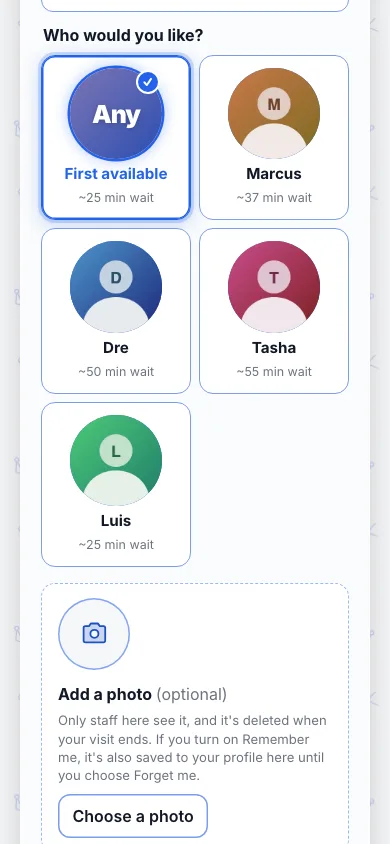
A single “45 minute wait” hides the truth. In a hair salon, a stylist with nobody waiting may be free in ten minutes while the owner’s chair is backed up for an hour. When customers choose a team member, the join page now shows that person’s own wait next to their name, and a “First available” card with the wait for whoever is free first.
People who would have joined the long line for a favourite sometimes pick someone free now. People who still want their favourite wait knowingly instead of finding out at the door. Nobody sees who else is waiting, only the time.
Quotes also get tighter over time. After a customer joins, their spot page can say “called in about 15 to 25 min” from that person’s real service times over the last 90 days, instead of one number that is right half the time.
3. Let people wait for a shorter alert
When the wait is over 10 minutes, the join page offers “Tell me when the wait is shorter”. The visitor picks 10, 15, 20 or 30 minutes and leaves an email. When the line reaches that number, one email goes out in your branding, and the alert ends.
It is not marketing and does not add anyone to a list; alerts expire at closing time. Texts are coming soon (Early Access); until then the alert is an email and customers can follow their place live on their phone.
This catches the person who looked at the line, sighed and drove past. A nail salon on a Friday evening can turn that glance into a customer who shows up when there is a chair.
4. Offer a sister location with no line
If you run more than one location, a long line at one can sit beside an empty room at another. When a location of the same business within 15 miles is open, offers the same services and has a wait more than 20 minutes shorter, the join page offers it: “Southside has no wait. Move my spot?”
Moving is never automatic. If the customer says yes, they join the other line through the normal check-in and their old spot is closed. A car wash or pet grooming group with two sites keeps customers it would have lost to a competitor down the road. It is in every plan for multi-location businesses.
5. Check in the whole family at once
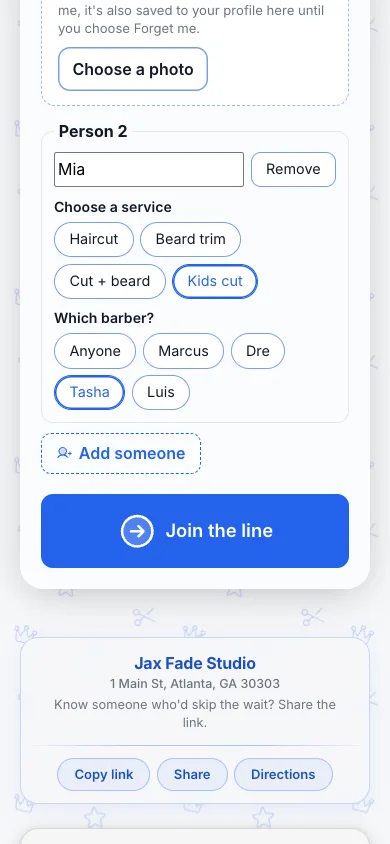
A parent with three kids used to mean four check-ins, or one name on the list and a fight at the counter. A family ticket lets “Add someone” put up to five people on one ticket, each with their own first name, service and team member (or “anyone”).
Each person gets their own place in the line and staff serve them separately, with a “Family of 3” marker. The status page lists everyone together, and leaving takes everyone still waiting off the line. It suits hair salons, barbershops, vet clinics, and any shop that sees groups. Restaurants keep party size instead.
What this does to the wait
None of these shortens a service. Together they spread arrivals across the day, match people to whoever is free, and replace guessing with numbers. That is how a walk-in line shrinks without a hire. Why customers leave before they are served shows what an unseen wait costs, and how to manage walk-ins covers the rest of the day.
All five are in every plan, from $29 a month for the first location; see pricing. Settings are explained in the Help Center.
Questions
How does NextUp Walk-in predict the best time to come?
From the average wait of each quarter-hour over the last eight weeks on the same weekday, blended with the live line for the next hour. It needs a few weeks of history and is shown as a forecast, not a guarantee.
Can customers see who else is waiting?
No. They see the wait, not names. Each person’s own wait is shown next to the team members they can choose.
Do wait alerts cost extra?
No. They are in every plan. Alerts go by email now; texts are coming soon.
Does it work for businesses other than barbershops?
Yes. It works for every business type NextUp Walk-in supports, such as hair and nail salons, auto service, pet groomers and vet clinics. Family tickets are for everything except restaurants, which use party size.